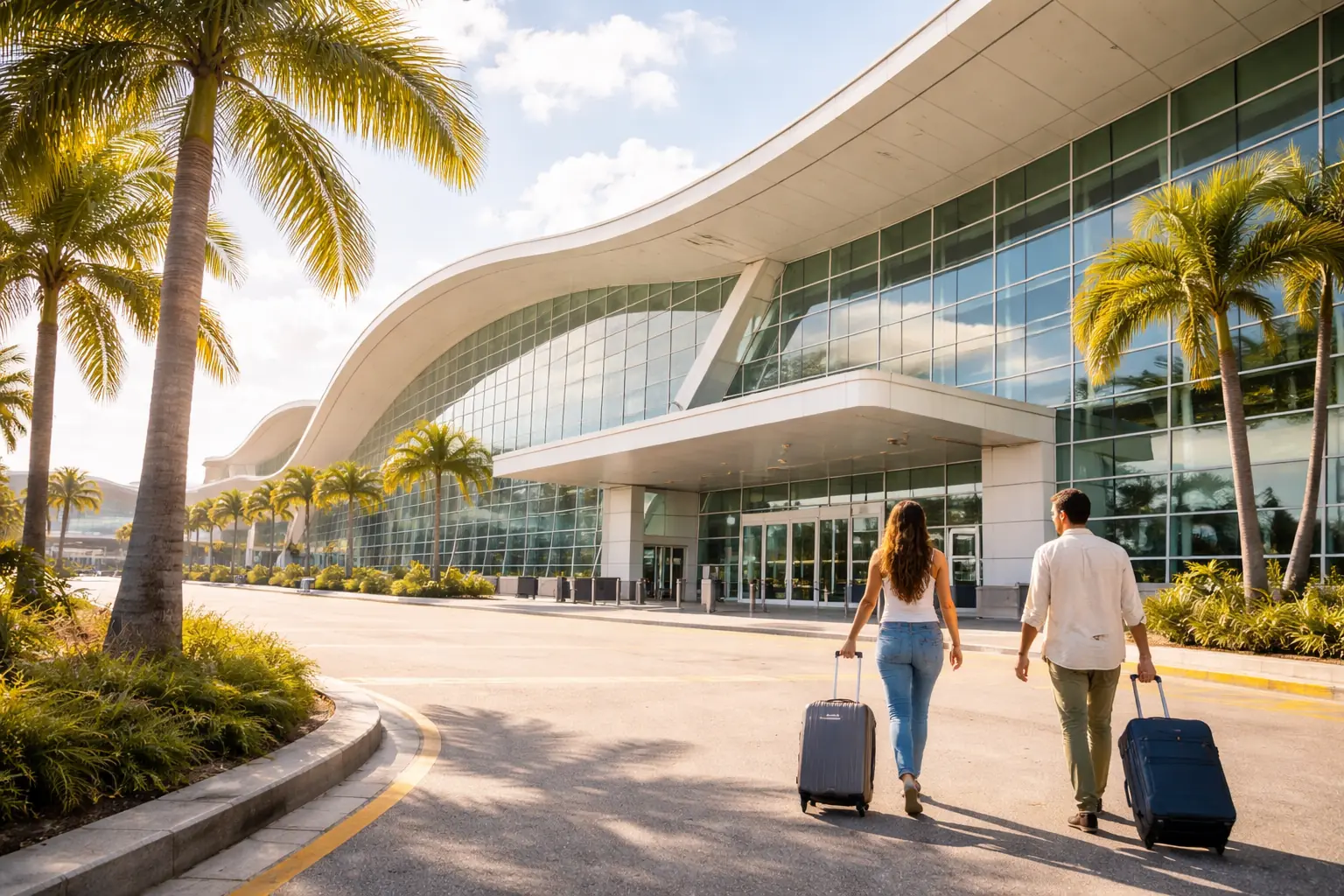
Planning your trip to the island shouldn’t feel like a logistics nightmare. If you’re currently booking flights, choosing the right Puerto Rico airport is the single most important decision you’ll make for your itinerary. Most travelers realize too late that landing in the wrong city can add four hours of driving to their first day. Whether you’re chasing the world-class surf in Rincón or the neon blue bioluminescent bays of Vieques, you’ve got to know which terminal sets you up for success (yes, really).
- Puerto Rico aviation logic: SJU for San Juan metro, BQN for Rincón surf coast logistics.
- Domestic flights from the US mainland bypass customs; international arrivals require CBP and MPC clearance.
Contents
- 1 Overview of Puerto Rico’s Main Airports
- 2 Puerto Rico Airport Arrivals: What to Expect
- 3 Puerto Rico Airport Departures: Tips for a Smooth Experience
- 4 International Travel from Puerto Rico Airport
- 5 Comparing the Two Major Airports in Puerto Rico
- 6 Additional Services and Facilities at Puerto Rico Airports
- 7 Travel Tips and Recommendations
- 8 FAQ
- 8.0.1 How many hours before my flight should I arrive at SJU?
- 8.0.2 Do I need a passport to fly to Puerto Rico from the United States?
- 8.0.3 Which airport is closest to the Rincon surfing beaches?
- 8.0.4 What are the transportation options from San Juan airport to the cruise port?
- 8.0.5 Are there lockers or luggage storage facilities at Puerto Rico airport?
- 9 Sources
Overview of Puerto Rico’s Main Airports
SJU serves as the Caribbean’s primary international hub, while BQN targets West Coast regional tourism. Navigating the island’s aviation network in 2026 involves more than just the capital city’s hub. You’ve got options ranging from massive international terminals with biometric gates to tiny regional strips that get you to the offshore islands in minutes.
Luis Muñoz Marín International Airport (SJU)
SJU airport features 24/7 operations, biometric boarding, and high-speed Starlink Wi-Fi for modern business travelers. Handling over 13.1 million passengers in 2025, it’s just a ten-minute hop from the San Juan metro area. This facility serves as a primary base for JetBlue and Frontier, offering thousands of daily connections. Using SJU is effective for general tourism if the project is at the planning stage. However, in the context of a destination wedding in the far south, this may not work because the drive from San Juan to Ponce can take two hours in heavy traffic.
Rafael Hernández Airport (BQN)
BQN airport offers 11,702 feet of runway but limited terminal amenities compared to SJU’s infrastructure.
Located on the northwest tip of the island in Aguadilla, it’s a former military base with a runway long enough to land a space shuttle. It primarily serves travelers heading to the “Porta del Sol” region. While it’s smaller than SJU, it handles roughly 850,000 passengers annually. It’s the go-to spot for those flying in from New York, Orlando, or Fort Lauderdale on budget-friendly carriers like Spirit.
It primarily serves travelers heading to the ‘Porta del Sol’ region, famous for its world-class surf and sunset views. After landing, many visitors head out to explore the coastal gems of the west, which offer some of the island’s most iconic scenery.

Puerto Rico Airport Arrivals: What to Expect
Touching down in the tropics is a thrill, but the arrival process can vary wildly depending on whether you’re coming from New York or Madrid. If you don’t know the drill, you’ll spend more time at baggage claim than at the beach.
Customs and Immigration Process
Your Puerto Rico airport arrivals experience is incredibly smooth if you’re flying from the US mainland. Since it’s a US territory, domestic passengers just walk off the plane and head to baggage claim—no passport required. However, international arrivals from Europe or South America must clear US Customs and Border Protection (CBP). Wait times at SJU for international flyers average 20–35 minutes in 2026, though Global Entry users often breeze through in under five.
Transportation Options After Arrival
San Juan ground transport: Fixed-rate tourist taxis compete with dedicated Uber and Lyft pickup zones.
Ground transport in 2026 has been overhauled to handle higher passenger volumes. You’ve got dedicated zones for rideshares and traditional taxis, but pricing has shifted with recent inflation.
Here are the current transport price thresholds:
- Rideshares: Uber and Lyft now have multi-level pickup spots. A ride to Old San Juan usually costs between $28 and $42.
- Taxis: Fixed-rate “Taxi Turístico” zones remain popular. Expect to pay $32–$38 for a ride to the Condado hotel district.
- Car Rentals: SJU features an on-site rental center. Rates in 2026 fluctuate between $65 and $150 per day for a mid-sized SUV.
- Regional Hops: For those going to Culebra, the Isla Grande Airport (SIG) is a better choice than SJU, with local flights starting at $85.
Local Amenities and Services
SJU is now a tech-forward hub with Starlink-backed Wi-Fi hitting speeds of 150 Mbps throughout the terminals. You’ll find currency exchanges in Terminal C and several ATMs. BQN is much more “no-frills,” offering a single snack bar and a small gift shop. Don’t expect to find a wide variety of services at the smaller regional strips; if you land in Ponce (PSE) late at night, bring your own snacks.
Puerto Rico Airport Departures: Tips for a Smooth Experience
Leaving the island involves a unique agricultural hurdle that catches many tourists off guard. If you skip this, the airline won’t even let you check your bags.
Check-In Procedures
The mandatory USDA agricultural scan is a departure-only requirement for all US-bound airline passengers. Your Puerto Rico airport departures routine starts with the USDA. Before you approach any airline counter, you must put your bags through a USDA scanner to ensure you aren’t carrying prohibited plants or fruits.
Follow this mandatory 1-2-3 sequence:
- USDA Inspection: Get your bags scanned and receive the official sticker.
- Airline Drop: Head to the counter for bag drop or use the new 2026 biometric self-drop kiosks.
- Security: Proceed to the TSA checkpoint once your bags are tagged.
Security and Boarding Information
TSA wait times at SJU can be unpredictable. During the 5:00 AM to 9:00 AM rush, standard lines often reach 45 minutes. TSA PreCheck and CLEAR Plus are both available and typically reduce this to under 8 minutes. BQN security is usually faster, but because the facility is small, a single delayed flight can cause a bottleneck that fills the entire lobby.
Duty-Free Shopping and Dining Options
Once past security at SJU, terminals B and C offer the best retail therapy. You can grab locally made Don Q rum starting at $19 a bottle or high-end perfumes. Dining has improved significantly; you can now find everything from local mofongo at Metropol to quick bites at El Mesón. Spending time in duty-free is effective for gifts if the trip is at the departure stage. However, in the context of domestic US flights, this may not work for tax-free savings, as those are usually reserved for international itineraries.
To visualize the layout of the main terminal and the location of the ground transportation zones at SJU, this comprehensive 4K walkthrough guide is essential:
International Travel from Puerto Rico Airport
SJU serves as the gateway to the Caribbean, but it also maintains strong links to Europe and South America. Understanding your Puerto Rico airport international options opens up a world of side-trip possibilities.
Popular International Destinations
Most international traffic from SJU flows to Madrid (Iberia), Bogotá (Avianca), and Panama City (Copa Airlines). Island-hopping to Culebra or Vieques utilizes Isla Grande (SIG) or Ceiba (RVR) regional airports. In 2026, seasonal direct flights to London and Frankfurt have become more common, reflecting the island’s growing global appeal.
Necessary Travel Documents
If you’re flying to a foreign country from SJU, you’ll need a valid passport. For non-US citizens entering Puerto Rico from abroad, the same visa requirements apply as for any other US port of entry. According to official tourism data, international visitor compliance has reached record highs due to better digital pre-clearance apps.
Tips for International Travelers
International transit through SJU to Caribbean destinations requires physical baggage re-claim and re-check procedures. Give yourself a buffer. Arriving three hours early for an international flight is the only way to avoid stress.
Keep these critical rules in mind:
- Currency Declaration: You must declare any cash over $10,000 when flying to a foreign destination.
- Lounge Access: Priority Pass works at the Avianca Lounge in Terminal C, though it often hits capacity by noon.
- Agriculture Check: Yes, even international flyers must pass the USDA scan if their flight transits through a US hub later.
Always get your USDA sticker before you join the airline check-in line.

Comparing the Two Major Airports in Puerto Rico
Airport choice dictates travel time: SJU minimizes metro transit, BQN eliminates cross-island driving fatigue. Deciding between SJU and BQN depends on your final destination and your tolerance for small-town vibes versus big-city convenience.
This table breaks down the 2026 metrics to help you choose:
| Feature | SJU (San Juan) | BQN (Aguadilla) | PSE (Ponce) |
| Annual Passengers | 13.1 Million | 850,000 | 250,000 |
| Primary Region | San Juan, East Coast | West Coast (Surfing) | South Coast |
| Tech Features | Biometrics / CLEAR | Basic TSA | Minimal |
| Uber to Old San Juan | $28 – $42 | $160+ | $120+ |
| Car Rental Choice | Massive Inventory | Limited / Local | Small / Boutique |
Differences in Location and Size
SJU is a massive, sprawling complex with multiple terminals and a dedicated airport hotel. BQN is much smaller, feeling more like a regional bus station that happens to have jumbo jets. While SJU is embedded in the urban sprawl of Carolina, BQN sits on a cliff overlooking the Atlantic, offering one of the most scenic landings in the world.
Unique Features of Each Airport
SJU hosts the only on-site airport hotel on the island, with rooms ranging from $175 to $275 per night. BQN’s claim to fame is its proximity to Crash Boat Beach—you can literally be in the water 15 minutes after clearing the terminal.
“Our focus is on blending high-tech efficiency with local hospitality,” says Jorge Hernández, CEO of Aerostar Airport Holdings. “We want SJU to feel like the true front door to the Caribbean.”
Choosing the Right Airport for Your Trip
If you’re staying in a resort in Rio Grande or Fajardo, fly into SJU. If your heart is set on the surfing breaks of Rincón or the sunsets in Cabo Rojo, BQN will save you hours of driving. Booking BQN is effective for West Coast exploration if the project is at the itinerary stage. However, in the context of needing a luxury vehicle or a specific high-end rental, this may not work because the BQN rental fleets are mostly economy-focused.
Additional Services and Facilities at Puerto Rico Airports
Even if you’re just passing through, knowing where the quiet spots and power outlets are can make or break your travel day.
Lounges and VIP Services
SJU offers the most comfort for premium travelers. The Lounge San Juan (Terminal A and C) provides showers, hot food, and a quiet workspace. Entry costs $50–$60 if you aren’t a Priority Pass member. There are no dedicated lounges in BQN or PSE, though both have basic seating areas with charging ports.
Accessibility Features
Puerto Rico’s airports are fully ADA-compliant, but SJU leads the way with modern infrastructure. You’ll find tactile flooring for the visually impaired and plenty of elevators. Both airports offer wheelchair assistance, but you should request it through your airline at least 48 hours before your flight to ensure availability.
Business and Internet Services
With the integration of 5G and Starlink, SJU is now a viable place to get work done. Terminal D has dedicated “work zones” with desks and high-speed ports. BQN is less equipped for business travelers; the Wi-Fi is functional but can be spotty during peak hours when everyone is trying to stream at the same time.
Download your offline maps before you land at BQN, as the Wi-Fi can be unreliable during storms.

Travel Tips and Recommendations
Mastering the island’s transit hubs requires a bit of local “know-how.” It’s all about timing and understanding the cultural rhythm.
Best Times to Travel
To avoid the worst crowds, try to fly on Tuesdays or Wednesdays. The weekend rush starts on Thursday afternoon and doesn’t let up until Monday morning. According to annual tourism reports, the shoulder season (May and October) offers the best balance of lower airfare and manageable airport lines. Aiming for a September trip is effective for budget travelers if the project is at the planning stage. However, in the context of hurricane season, this may not work due to the risk of flight cancellations.
Local Cultural Insights
Don’t be surprised if your flight to Puerto Rico is a party. It’s common for passengers to clap when the plane lands—a local tradition celebrating a safe return home.
- Greetings: A simple “Buenos días” to the TSA agent or USDA inspector goes a long way.
- Patience: Things move a little slower here. It’s called “Island Time” for a reason.
- Dress Code: The terminals are notoriously cold. Keep a sweater in your carry-on even if it’s 90 degrees outside.
Staying Connected: Wi-Fi and Communication
If you’re a US resident, your phone plan works in Puerto Rico just like it does at home—no roaming fees. For international visitors, buying an eSIM is your best bet. Avoid the physical SIM kiosks at the airport, as they often charge a 40% premium compared to online providers.
Keep your physical ID handy at all times; even with biometric boarding, security may request a manual check.
Don’t let a missed agriculture scan or a long TSA line ruin your travel day. To help you navigate the unique requirements of the island’s hubs, we’ve designed a high-contrast, PDF-ready checklist. Download it below to keep the 1-2-3 departure sequence and latest transport rates right in your pocket.

FAQ
How many hours before my flight should I arrive at SJU?
For domestic flights to the US mainland, arrive at least 2.5 hours early to account for the USDA bag scan and potential TSA lines. If you’re flying internationally, give yourself a full 3 hours to ensure a smooth check-in process.
Do I need a passport to fly to Puerto Rico from the United States?
As long as you’re a US citizen or permanent resident flying from a US state, you only need a government-issued photo ID that is Real ID compliant. Since Puerto Rico is a US territory, you are not required to present a passport for domestic travel.
Which airport is closest to the Rincon surfing beaches?
Rafael Hernández Airport (BQN) in Aguadilla is the closest major hub to the western surf breaks, located about 30 to 45 minutes away from Rincón. Flying into SJU instead would require a significantly longer 2.5-hour drive across the island.
What are the transportation options from San Juan airport to the cruise port?
The most efficient options are Uber or a fixed-rate taxi from the official airport stand. Both will get you to the Old San Juan or Pan American cruise piers in about 15–20 minutes, with fares generally ranging from $25 to $40.
Are there lockers or luggage storage facilities at Puerto Rico airport?
SJU has a luggage storage service located in Terminal E on the second floor. They charge per bag based on size and duration, which is ideal if you have a long layover and want to visit the city without carrying your gear.
Sources
- Aerostar Airport Holdings (2025). Annual Passenger Traffic and Infrastructure Report. (Author: Jorge Hernández, CEO).
- Puerto Rico Tourism Company (2025). Official Visitor Logistics and Compliance Study. (Author: Carlos Mercado, Executive Director).
- Discover Puerto Rico (2025). Tourism Trends and Seasonal Accessibility Analysis. (Author: Ed Carey, Chief Sales Officer).