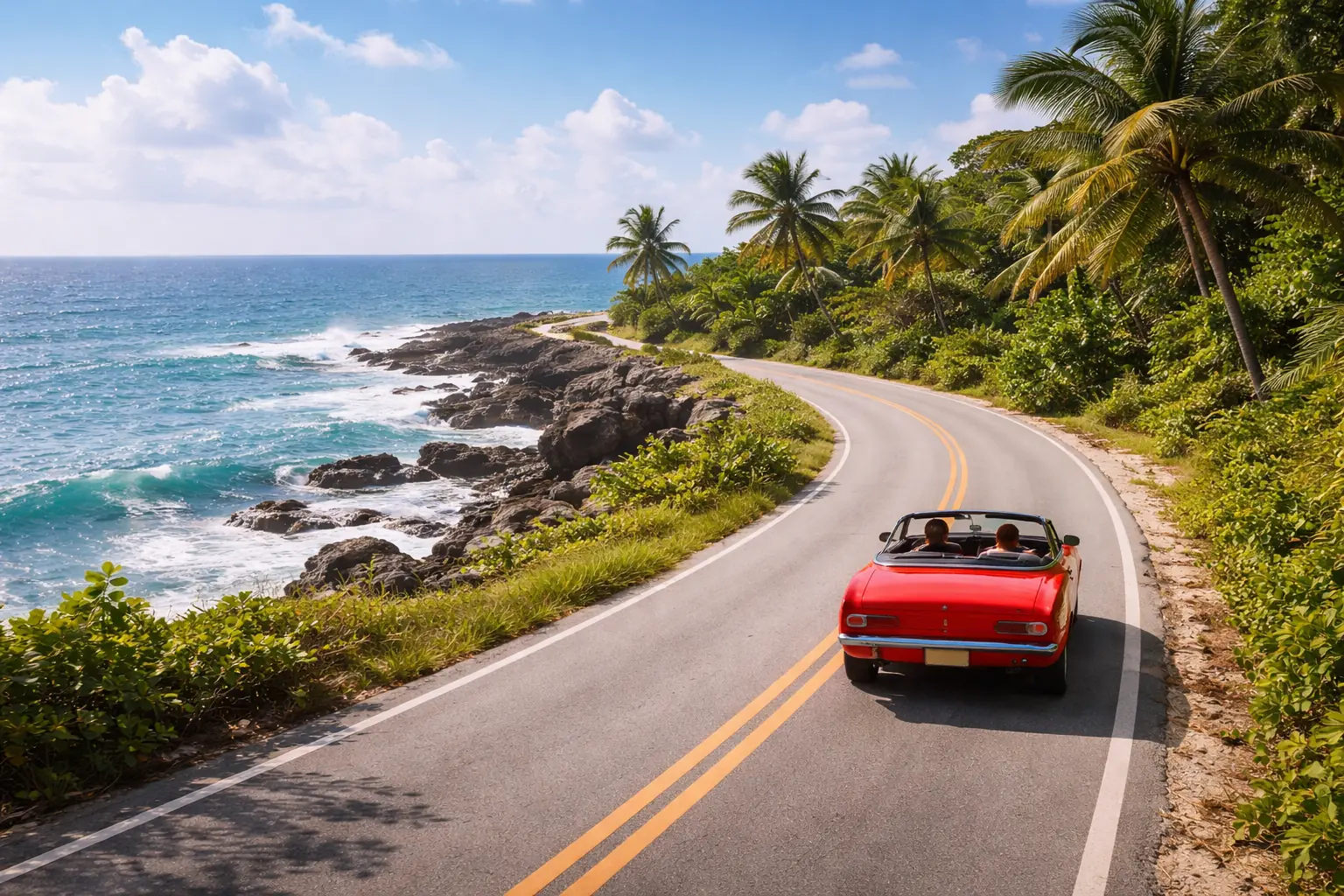
How long does it take to drive around Puerto Rico — one of the most common questions people ask when planning their first trip to the island. On average, the full loop along the coastal highways takes 5 to 8 hours of pure driving time with no stops. But when folks actually search how long does it take to drive around Puerto Rico, they usually want the real-world answer that includes traffic, photo stops, lunch breaks, beach swims, and those random detours into small towns. Most travelers stretch the route over 3 to 7 days so the whole experience feels like a vacation instead of a race.
- Highways promise 5-8 hours around Puerto Rico, yet real trips demand 3-7 days.
- Puerto Rico spans 110 miles east-west, but terrain forces 300-mile loops.
- Driving conquers the island fast, while walking the perimeter stays impossible.
Contents
- 1 Understanding Puerto Rico’s Geography
- 2 Planning Your Drive Around Puerto Rico
- 3 What to See on Your Road Trip
- 4 How Long Does It Take to Walk Around Puerto Rico?
- 5 Travel Tips for Driving in Puerto Rico
- 6 Extra Value: Local Experiences and Cuisine
- 7 Conclusion: Making the Most of Your Puerto Rico Adventure
- 8 FAQ
- 8.0.1 Can I realistically drive around Puerto Rico in one day?
- 8.0.2 Is walking the whole perimeter of Puerto Rico possible for average hikers?
- 8.0.3 Do I need a special license or insurance to drive in Puerto Rico?
- 8.0.4 What’s the best time of year to drive around Puerto Rico without weather issues?
- 8.0.5 Are the roads safe enough for first-time visitors driving at night?
- 9 Sources
Understanding Puerto Rico’s Geography
The island is surprisingly compact, yet the landscape changes so much that the answer to how long does it take to drive around Puerto Rico always sparks debate. Before you grab the keys, it helps to get a clear picture of the actual size and terrain so you don’t end up surprised when 300 miles suddenly eats up an entire day.
How Many Miles Long is Puerto Rico?
how many miles long is Puerto Rico from east to west is roughly 110 miles (about 177 km), while the widest point north to south measures 35 to 40 miles (56 to 64 km). The complete coastal loop usually adds up to 300 to 350 miles depending on the exact roads you choose. These are the numbers people most often hear when they ask how many miles long is Puerto Rico. Of course how long does it take to drive around Puerto Rico depends on whether you stick to the fast highways or detour into every interesting corner along the way.
Key Regions to Explore on Your Drive
- North coast (San Juan to Arecibo) — usually 1.5 to 2 hours in normal traffic
- West coast (Rincón area) — add 45 to 75 minutes for surf spots and epic sunsets
- South coast (Ponce to Guayama) — one of the smoothest and quietest stretches
- East coast (Fajardo back to San Juan) — expect more rain and heavier traffic near the capital
Each section slows you down in its own way, and that is exactly why how long does it take to drive around Puerto Rico almost never stays at the promised 5 hours.
The Unique Terrain and Landscape
In the center, mountains climb above 4,000 feet, while the coastline switches between long sandy beaches and rocky cliffs. The eastern side stays humid and covered in tropical forest almost year-round. Because the terrain shifts so dramatically, the answer to how long does it take to drive around Puerto Rico changes a lot: in the dry season you can often hit the lower end of the range, but during rainy months it is easy to lose an extra 2 or 3 hours.
Compact size misleads drivers, varied terrain doubles effective travel time.

Planning Your Drive Around Puerto Rico
Solid planning is what turns the question how long does it take to drive around Puerto Rico from stressful to exciting. There is no single perfect route, but a few proven options help you stay in control of your time.
Choosing the Best Route
Most visitors go clockwise: start in San Juan, head west on PR-2, drop south, then return east on PR-52. The opposite direction works just as well. When people ask how long does it take to drive around Puerto Rico on this loop, the usual reply is 6 to 9 hours nonstop, but with normal breaks it almost always becomes a full day.
Here is a quick step-by-step to lock in your route:
- Pick your starting city and overnight stops first.
- Enter the full loop in Google Maps or Waze for a baseline time.
- Mark two or three must-see detours and add 30 to 90 minutes each.
- Check construction updates on the PRHTA site the night before.
- Test a short section on day one to feel the real traffic rhythm.
- Adjust for any toll roads you want to use.
- Build in extra buffer time for spontaneous stops. Toll roads cut minutes off loops, local detours create lifetime memories.
AutoExpreso Toll System and Rental Requirements
Virtually every rental car in 2026 comes pre-equipped with an AutoExpreso transponder. Most companies add a $10–25 daily fee for unlimited use plus the actual tolls on key routes including PR-52, PR-66, PR-22, PR-5, PR-20, PR-53, and the Moscoso Bridge. Skip the tag and you face $25+ fines per violation plus the full toll amount from both the rental company and the authority. TollGuru remains the smartest tool for calculating exact costs and avoiding dynamic pricing during rush hours.
Estimating Travel Time
Pure driving time sits between 5 and 8 hours. Add meals, beaches, short walks, and photos and you are looking at 9 to 13 hours total. So when someone asks how long does it take to drive around Puerto Rico, the honest answer is usually “one very long day or 3 to 5 relaxed days.” Everything depends on the season and whether you are comfortable driving after dark.
Dry season speeds Puerto Rico drives, rainy months add 2-3 hours delay.
Modern drivers also plan around EV charging stops. The National Electric Vehicle Infrastructure (NEVI) Formula Program continues funding new stations along major highways through 2026, making electric rentals increasingly practical for the full loop.
Weather Considerations and Seasonal Tips
From December through April you get the fewest rains and the most predictable roads. Between May and November heavy showers can hit, especially in the mountains, which instantly adds 1 to 3 hours to how long does it take to drive around Puerto Rico on a bad day.
Comparison Table: Popular Route Options
| Route Focus | Drive Time (non-stop) | Best For | Drawbacks | Total Miles (approx.) |
|---|---|---|---|---|
| Full Coastal Loop | 5–8 hours | First-timers wanting variety | Heavy traffic near cities | 300–350 |
| Panoramic Interior | 4–5 hours | Mountain lovers & coffee fans | Narrow roads, fewer services | 150–200 |
| East Coast Only | 2–3 hours | Quick beach & rainforest trips | Crowded weekends | 80–100 |
| West to South | 3–4 hours | Surf & history combo | Longer if detouring to Cabo Rojo | 120–150 |
What to See on Your Road Trip
The stops you make are what turn the answer to how long does it take to drive around Puerto Rico into something personal — from “done in one day” to “a whole week of fun.”
Must-Visit Coastal Towns
Rincón offers world-class surfing and dramatic sunset cliffs; plan 1 to 2 hours just to enjoy the beach. Ponce has beautiful colonial plazas and a historic firehouse museum that makes a perfect lunch stop. Fajardo sits right next to the bioluminescent bay and ferry access to Vieques — arrive before dusk for the best experience, including world-famous Mosquito Bay. Luquillo features food kiosks with fresh seafood steps from the sand and works great as an afternoon break. These towns sit 30 to 90 minutes apart, so you can easily visit two or three in a single driving day without feeling rushed. Fajardo sits right next to the bioluminescent bay and Vieques ferry ride — arrive before dusk for the best experience, including world-famous Mosquito Bay.
Cabo Rojo National Wildlife Refuge
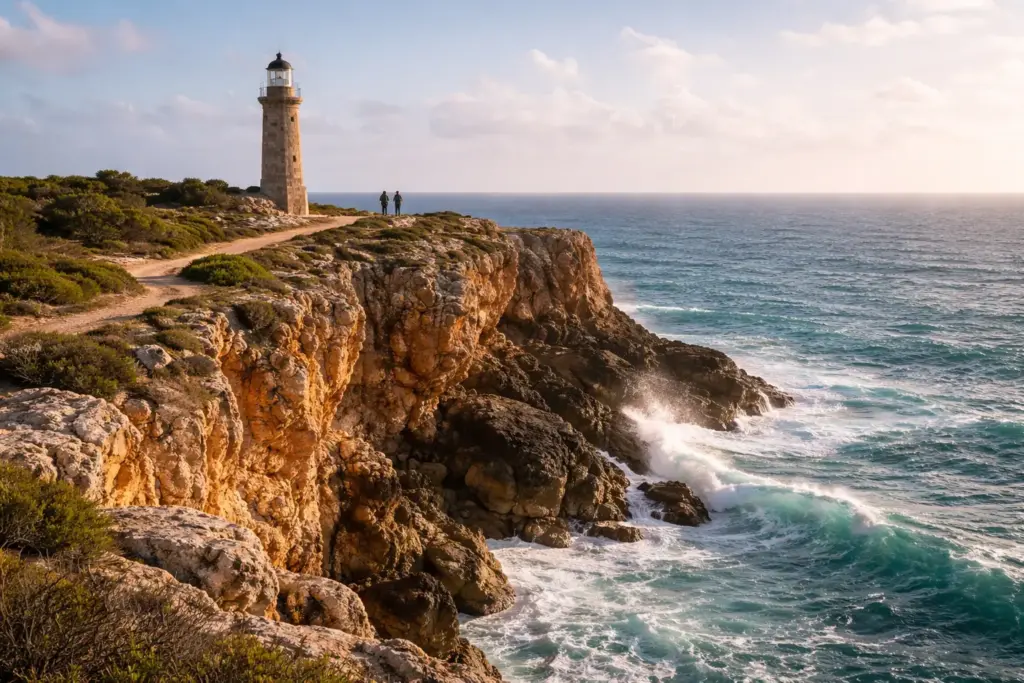
Don’t miss the dramatic limestone cliffs, pink salt flats, and Los Morrillos Lighthouse at Cabo Rojo National Wildlife Refuge in the southwest. The short drive to Playa Sucia (La Playuela) delivers one of the island’s most photogenic beaches and excellent birdwatching — a perfect half-day detour that adds real value to any loop.
Exploring Puerto Rico’s National Parks
El Yunque remains the star with its rainforest trails and waterfalls, but Toro Negro State Forest gives you higher peaks and natural swimming holes. Guánica Dry Forest surprises everyone with its cactus-lined paths just minutes from the south coast. Most parks require reservations or day passes on busy weekends, and trails close early if rain starts. A 2- to 4-hour hike fits nicely between driving segments and breaks up the day perfectly.
National parks break driving flow, hiking trails reward deeper exploration.
Cultural and Historical Landmarks
Old San Juan’s forts, Ponce’s plazas, and roadside murals in smaller towns add real depth to the trip. Stop at a working coffee hacienda in the central mountains for a quick tour — many places offer tastings for just $5 to $10. These sites rarely take more than an hour but give you context for all the landscapes you are passing through.
If you want to see what the full adventure actually looks like, check out this popular 2-day road trip video that packs in beaches, rainforests, and pork highway stops:
How Long Does It Take to Walk Around Puerto Rico?
how long does it take to walk around Puerto Rico is a question that comes up right after the driving one. Doing the entire loop on foot sounds epic in theory, yet it almost never happens in practice.
Feasibility and Challenges of Walking
how long does it take to walk around Puerto Rico in theory could take months because there is no continuous official trail around the whole perimeter and many roads have almost no shoulder. Heat, sudden rain, and limited services between towns add real safety concerns. Experienced long-distance walkers say it is technically possible with careful planning and support, but almost no regular visitor attempts the full distance.
Recommended Walking Trails
El Yunque trails like La Mina or El Toro run 2 to 5 miles and take 2 to 4 hours with waterfalls and mountain views. Cañón San Cristóbal offers a dramatic 5.6-mile gorge hike that is moderate to hard. Toro Negro Forest paths give higher elevation scenery and natural pools. Guánica Dry Forest has 36 miles of arid loops perfect for shorter or longer days. All these trails stay manageable in 3 to 6 hours and pair nicely with a drive to the trailhead.
Comparing Driving vs. Walking
When people compare how long does it take to drive around Puerto Rico and how long does it take to walk around Puerto Rico, the difference is huge: hours versus months. Driving lets you see the entire island quickly, while walking gives you a deep, slow connection to one specific area at a time.
Travel Tips for Driving in Puerto Rico
Local roads mix modern highways with narrow mountain lanes, so a few smart habits keep everything smooth. Rent a compact car or small SUV — anything bigger feels tight on the back roads. Gas stations appear regularly, but fill up before heading into remote areas.
Waze or Google Maps works great here; both handle tolls and real-time traffic well. Signs mix English and Spanish, and distances show in kilometers while speed limits read in miles per hour — just double-check your dashboard. Toll tags come standard with most rentals and save you from stopping at booths. Apps like TollGuru and GasBuddy further optimize both tolls and fuel (or EV charging) stops in real time.
Local Driving Laws and Regulations
Urban zones top out at 25 mph (up to 35 on wider roads), rural stretches run 45 mph, and highways hit 55 to 65 mph. Seat belts are mandatory for everyone, and kids under 9 need boosters or car seats. Open container rules are strict and DUI enforcement is heavy. Puerto Rico’s Strategic Highway Safety Plan 2024-2028 continues pushing Vision Zero goals to cut fatalities and serious injuries across the network.
Safety Tips for Travelers
Cars unlock full coastal access, safety rules enforce defensive habits.
Drive defensively because some locals push the speed limits. Avoid night driving in unfamiliar areas. Keep cash handy for small tolls and roadside vendors. Check tire pressure daily because potholes sneak up fast.
Speed Cameras, School Zones, and Vision Zero
Watch for automated speed cameras in urban zones and strictly obey 15 mph limits near schools. The PRHTA actively enforces these under the 2024-2028 Strategic Highway Safety Plan to protect vulnerable road users and keep everyone safer on the loop.
“The roads in Puerto Rico can be a little intense! While road systems and signals are the same as the mainland USA, I found that some Puerto Rican drivers can be a bit, well, free-spirited!” — Rachel Off Duty, travel blogger and author of the 10-Day Puerto Rico Road Trip Itinerary.

Extra Value: Local Experiences and Cuisine
The drive gives you more than scenery when you lean into local flavor. Pull over for roadside stands or join a festival and the whole trip gains a depth no guidebook can fully capture.
Where to Taste Authentic Puerto Rican Food
Roadside lechón slows progress, authentic flavors justify every extra stop. Lechón right off the pork highway near Cayey, mofongo in Ponce, and fresh empanadas from beach kiosks taste completely different when they come hot off the grill. Budget $10 to $20 per person for a solid meal — prices stay reasonable once you leave the main tourist strips.
Engaging with Local Festivals and Events
Sundays often bring spontaneous music in town plazas. Look for parrandas in December or smaller cultural fairs any month of the year. These pop-up events usually last 2 to 4 hours and cost nothing beyond what you spend on snacks and drinks.
Souvenirs and Local Crafts to Look For
Handmade vejigante masks, coffee beans from mountain farms, and carved santos travel well and do not take up much space. Roadside artisans near Rincón or Fajardo usually give the best prices and the best stories to go with them.
Watch this detailed 8-day road trip video for real-time driving tips and hidden stops most maps miss:
Conclusion: Making the Most of Your Puerto Rico Adventure
Wrapping up your Puerto Rico road trip is about more than just checking off a map; it’s where tropical rainforests, colonial history, and crashing waves finally click into place. The secret to a successful loop is flexibility. Whether a sudden mountain rain steers you into a cozy café or a Rincón sunset demands an extra hour of your time, lean into the detour.
The island rewards those who slow down. While you can drive the perimeter in a day, the magic happens when you stop rushing. Give yourself permission to explore the “extra” miles—that’s where the best stories are found.
Summary of Key Points
how long does it take to drive around Puerto Rico ranges from 5 to 8 hours of actual driving to several relaxed days with comfort. how many miles long is Puerto Rico is about 110 miles end to end, which makes the whole loop totally doable. And how long does it take to walk around Puerto Rico stays mostly a theoretical question for the average traveler.
Ready to turn this guide into action? Grab our free printable checklist and never miss a toll, EV stop, or safety item on your Puerto Rico loop.

Final Travel Recommendations
Rent your car early, book park passes ahead of time, and always leave buffer time. According to Discover Puerto Rico (2026 report), 2025 brought over 6.8 million air arrivals, 1.6 million cruise passengers, and nearly 7.9 million hotel nights, pushing the visitor economy toward an $8.2 billion impact. The Foundation for Puerto Rico’s Visitor Economy Performance Model (2025) confirms offshore spending rose to $7.8 billion, so supporting local spots along your route helps keep things authentic.
Maps plan ideal routes, real weather forces constant flexible adjustments.
Encouragement to Explore Beyond the Road Trip
Hop a ferry to Vieques or Culebra for a slower pace once you finish the loop — check updated schedules online. Or park the car for a full day and hike El Yunque instead. The island rewards anyone who mixes wheels with feet and a little curiosity.
FAQ
Can I realistically drive around Puerto Rico in one day?
Yes, but only if you skip most stops and accept 10 to 12 hours total with breaks — most people end up regretting the rush.
Is walking the whole perimeter of Puerto Rico possible for average hikers?
No, unless you are an experienced long-distance walker with support; the lack of continuous trails and shared roads makes it unsafe and impractical.
Do I need a special license or insurance to drive in Puerto Rico?
No, a valid U.S. license works fine, but full-coverage rental insurance is smart given the road conditions.
What’s the best time of year to drive around Puerto Rico without weather issues?
December through April cuts rain delays, though crowds increase — shoulder months like May or November often give the best balance.
Are the roads safe enough for first-time visitors driving at night?
Usually not in rural or mountain areas; stick to daylight and well-lit highways to avoid surprises.
So how many days are you thinking of setting aside for the full loop around the island? Drop your answer in the comments — I’d love to compare plans!
Sources
- Discover Puerto Rico: Puerto Rico Reaches Record Tourism Heights in 2025 (January 2026)
- Foundation for Puerto Rico Visitor Economy Performance Model (2025)
- Puerto Rico Strategic Highway Safety Plan 2024-2028 (PRHTA)
- Puerto Rico Highway Safety Improvement Program 2024 Annual Report (FHWA)
- TollGuru AutoExpreso Puerto Rico Toll Complete Guide (2025/2026)
- FHWA National Electric Vehicle Infrastructure (NEVI) Formula Program Fact Sheet and FY 2026 Apportionment
- Rachel Off Duty: The Ultimate 10-Day Puerto Rico Road Trip Itinerary (2023)
- Wikipedia: Geography of Puerto Rico (cross-verified with FHWA data 2020–2026)