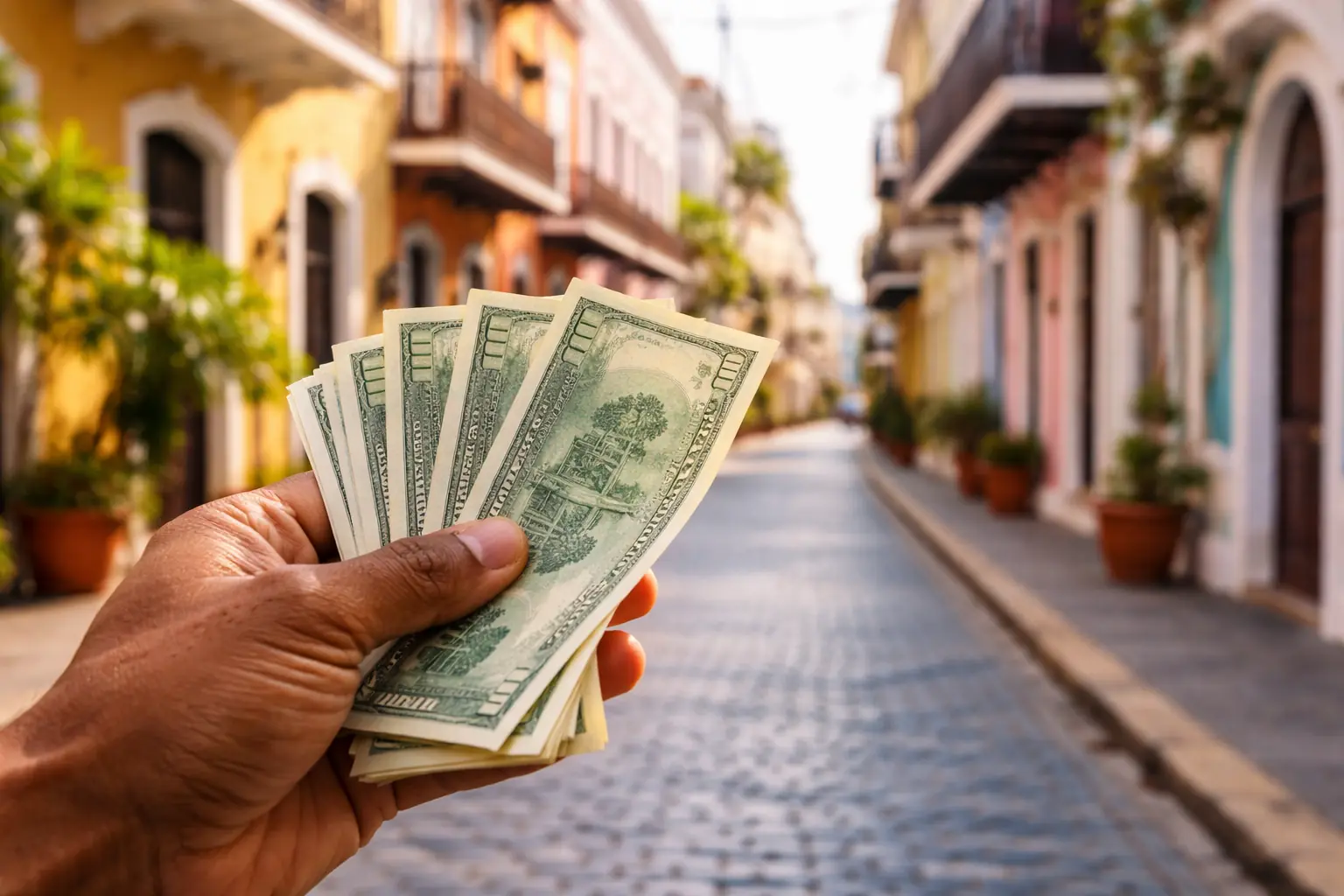
Whether you’re a sun-seeking tourist or a crypto-investor eyeing Act 60 benefits, the Puerto Rico US currency is the United States Dollar (USD). This means if you’re coming from the mainland, you don’t need to worry about conversion rates or international banking fees that usually plague Caribbean vacations. While the bills look the same, the way money moves through the island—governed by unique tax incentives and the legacy of the Jones Act—creates a financial landscape that’s surprisingly different from Florida or New York.
Puerto Rico utilizes USD exclusively; for US citizens, travel involves zero currency exchange or fees.
Contents
- 1 Overview of Currency in Puerto Rico
- 2 Puerto Rico’s Use of US Currency
- 3 Puerto Rico Currency to USD: Exchange Rates
- 4 Puerto Rico US Currency Symbol and Denominations
- 5 Travel Tips for Using US Currency in Puerto Rico
- 6 Economic Benefits of US Currency in Puerto Rico
- 7 FAQs About Puerto Rico US Currency
- 8 Sources
Overview of Currency in Puerto Rico
Understanding the money here requires looking past the green paper and into the island’s status as a tax-advantaged territory. The currency isn’t just a medium of exchange; it’s a bridge between a local economy and a massive federal system that injects billions in disaster relief and social funding annually.
History of Currency in Puerto Rico
Before the 1900s, the island operated on the Spanish Provincial Peso, which was specifically minted for Puerto Rico. These silver coins were the lifeblood of the local coffee and sugar trades. If you’re a numismatist, you’ll find that a well-preserved 1895 Puerto Rican Peso can fetch anywhere from $400 to $2,500 at auction (yes, really). This era ended abruptly when the US military took control, leading to a forced transition that fundamentally changed the island’s wealth distribution.
Transition to US Dollar
The 1900 Foraker Act replaced the Puerto Rican Peso with the US Dollar at 0.60 parity.
This legislative move mandated that the Puerto Rico US currency would officially be the dollar. It effectively devalued the local savings by 40% in an instant. This transition wasn’t just about coins; it was about tying the island’s economic destiny to the US Treasury, a move that still dictates local fiscal policy over 120 years later.
Current Economic Implications
Today, using the dollar provides a shield against the hyperinflation seen in some neighboring nations. However, because Puerto Rico uses the USD, it can’t print its own money to pay off its massive $70 billion+ debt. This creates a “fiscal trap” where the island has a high cost of living but limited tools to stimulate the economy, leading to a reliance on federal transfers which can range from $15 billion to $22 billion in a typical year. Puerto Rico’s USD stability shields against Caribbean inflation but restricts independent local monetary policy tools.
Puerto Rico’s Use of US Currency
The dollar’s role on the island is evolving as digital payments and tax incentives draw in a new wave of Act 60 residents. While you’ll use the same $20 bills you use in Chicago, the context of your spending—from the 11.5% sales tax (IVU) to the rise of P2P apps—is uniquely Puerto Rican.
Why Puerto Rico Uses US Currency
As an unincorporated territory, Puerto Rico falls under the Territorial Clause of the US Constitution. This gives Congress the power to determine the monetary system. Since the 1900 Foraker Act, the US has maintained a unified currency to simplify federal oversight and ensure that trade between the island and the mainland remains frictionless.
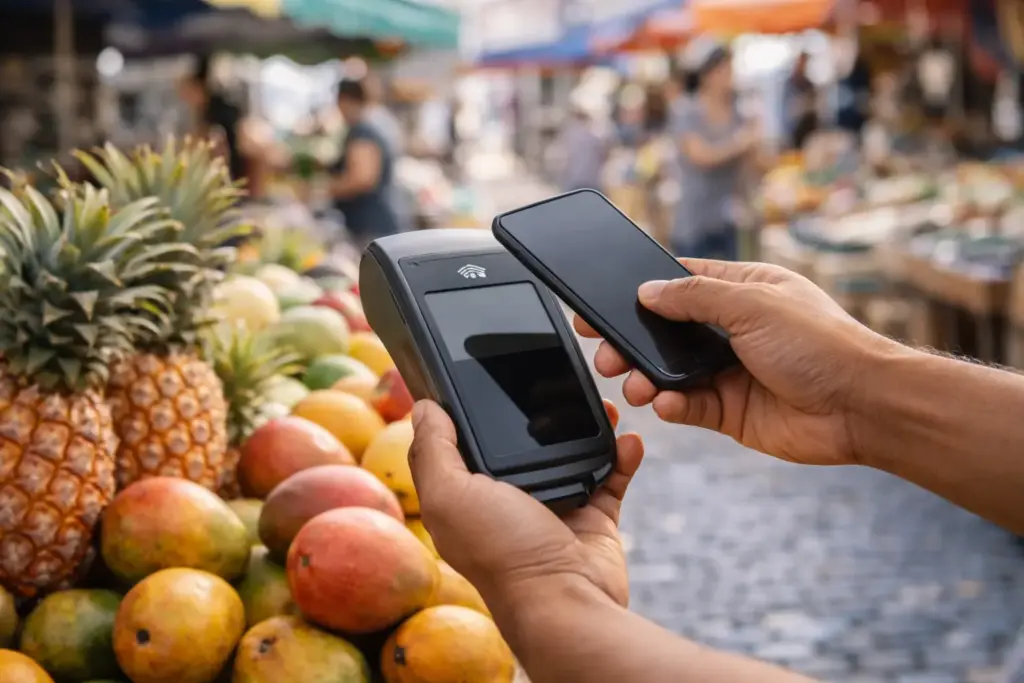
NFC and Contactless Infrastructure (The 2026 Standard)
Contactless NFC payments are San Juan’s 2026 standard, yet rural transactions remain strictly cash-dependent. Roughly 85% to 90% of urban merchants now accept Apple Pay and Google Wallet. However, if you’re heading to the central mountains (La Cordillera Central), that number drops to about 30%. In these rural “chinchorros,” your high-tech watch won’t buy you a $3.00 empanadilla; you’ll need physical cash.
Act 60 and the Tax Haven Synergy
Act 60 transforms the US Dollar into a 0% capital gains vehicle for qualifying residents.
The Puerto Rico US currency acts as a vehicle for this program. This law allows residents who spend at least 183 days on the island to pay 0% tax on capital gains and 4% on corporate export income. For someone moving $1,000,000 in assets, this creates a “shadow value” for the dollar that doesn’t exist on the mainland. It’s why you’ll see luxury condos in Condado selling for millions in cash.
Impact on Trade and Tourism
Tourism accounts for about 7% of the GDP. Because there’s no Puerto Rico currency to USD conversion, the “friction” of travel is nearly zero for Americans. This leads to a 20% higher “spontaneous spend” compared to destinations where travelers have to calculate exchange rates. On the trade side, the Jones Act requires all goods to arrive on US ships, which keeps the dollar strong but pushes consumer prices 15% to 25% higher than in Florida.
Comparison with Other Territories
Puerto Rico is the largest territory using the USD, but it shares this trait with others.
| Territory | Official Currency | Sales Tax (VAT/IVU) | Primary P2P App |
| Puerto Rico | USD | 11.5% | ATH Movil |
| US Virgin Islands | USD | 0% | Venmo/Zelle |
| Guam | USD | 4% | PayPal/Venmo |
| American Samoa | USD | 0% | Local Bank Apps |
“The use of the U.S. dollar in Puerto Rico provides a stable monetary foundation, but the lack of local fiscal autonomy remains a challenge for long-term growth.” — Sergio Marxuach, Policy Director at Center for a New Economy (CNE).
Puerto Rico Currency to USD: Exchange Rates
The search term Puerto Rico currency to USD is technically a trick question. Since 1900, the rate has been locked at 1:1 because they are the same currency. However, for international travelers, the “rate” is simply the current global value of the US Dollar.
Historical Exchange Rate Trends
Since the parity is fixed, the only trends to watch are the USD’s strength against the Euro or the British Pound. In 2025-2026, a strong dollar meant that a meal in San Juan costing $50 USD felt more expensive to UK travelers. If the dollar weakens to a 1:1 ratio with the Euro, expect a 15% surge in European tourists who suddenly find the island a bargain.
Factors Affecting Exchange Rates
Local factors don’t change the Puerto Rico us currency to USD rate, but they do change “Real Exchange Value.”
- The Jones Act inflates Puerto Rican consumer prices by 15% through mandatory US-vessel shipping requirements.
- Electricity Costs: PR has some of the highest residential electric rates in the US ($0.25 – $0.35 per kWh), which effectively lowers the disposable income of every dollar earned on the island.
Tips for Currency Exchange in Puerto Rico
If you are coming from abroad, don’t exchange your money at the airport kiosks.
- Use Local ATMs: Look for the “ATH” logo. Withdrawal fees are usually $2.50 to $5.00, but the exchange rate is the mid-market rate.
- Avoid Credit Card DCC: If a terminal asks to charge you in your home currency, say “No.”
- Daily Cash Threshold: Always keep $50 to $100 in small bills ($1s and $5s) if you plan on leaving San Juan.
Avoid the kiosks at Luis Muñoz Marín International unless it’s an emergency; their rates are usually 5% worse than banks. For a smooth arrival, check the current transportation rates and services at the San Juan terminal facilities before you land.
Puerto Rico US Currency Symbol and Denominations
The Puerto Rico us currency symbol is the “$”. Local slang terminology uses “Peso” and “Peseta,” but legal tender is strictly US Currency. You’ll never see a price tag that isn’t in USD.
US Currency Symbols Explained
The symbol appears before the number ($10). In more formal financial documents or real estate listings, you might see “USD $500,000” to clarify for international buyers. The “¢” symbol is almost extinct, replaced by decimal notation.
Common Denominations Used in Puerto Rico
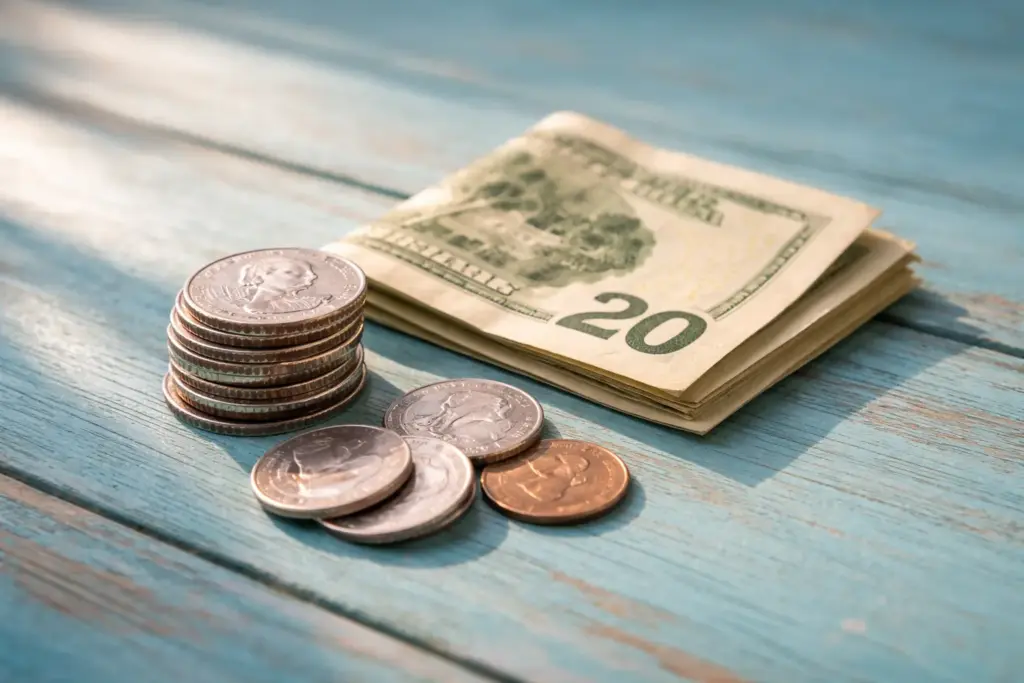
The island uses all standard US denominations ($1, $5, $10, $20, $50, $100).
- The $20 Bill: This is the standard for ATMs.
- The $100 Bill: Often rejected at gas stations and small bakeries due to counterfeit fears.
- The “Peseta”: This is the local term for the 25-cent quarter.
The Rise of the “Digital Peso” (USDC and Crypto)
Puerto Rico has become a hub for blockchain technology. While you can’t buy groceries with Bitcoin at most places, many high-end real estate transactions in Dorado are now being settled in USDC (Stablecoins).
Stablecoins like USDC serve as high-value settlement layers for Puerto Rico’s emerging digital real estate.
Using Coins and Bills in Daily Transactions
- Tipping: 15% to 22% is the standard in restaurants.
- Small Vendors: Many roadside kiosks have a “Card $10 Minimum” sign.
- Parking: Older meters still require physical quarters (pesetas).
Travel Tips for Using US Currency in Puerto Rico
Spending money in Puerto Rico is convenient, but there are a few local quirks that can cost you if you aren’t prepared.
Budgeting for Your Trip
Expect to spend between $150 and $400 per day.
- Budget: $150 (Hostels, street food, public transport).
- Mid-range: $250 (3-star hotel, two sit-down meals, Uber).
- Luxury: $600+ (Resorts, fine dining).
Avoiding Common Currency Scams
Scams are rare, but “Independent ATMs” in bars can charge $8.00 per transaction. Stick to bank-affiliated ATMs like Banco Popular or FirstBank. Also, always confirm flat rates for taxis before the driver pulls away if a meter isn’t present.
Using Credit and Debit Cards
ATH Movil dominates Puerto Rico’s P2P ecosystem, making digital USD transfers faster than traditional banking.
You cannot understand the Puerto Rico US currency landscape without this app. It is used by over 1.7 million residents. Even small fruit stands that don’t take credit cards will often have a sign saying “Aceptamos ATH Movil.” While travelers usually can’t sign up without a local bank account, it’s the reason why many locals carry zero cash.
This guide provides a breakdown of travel costs and money tips for visiting Puerto Rico in 2026.
Economic Benefits of US Currency in Puerto Rico
The USD provides a level of certainty that is the envy of the Caribbean. Puerto Rico’s banking system operates under US Federal regulations, ensuring FDIC-insured stability for all deposits. It allows the island to maintain a “AAA” style of financial infrastructure despite its debt struggles.
Stability and Confidence in US Dollar
Because the dollar is the global reserve currency, Puerto Rican businesses don’t have to hedge against currency risk when buying inventory from abroad. This stability is what keeps the $100 billion GDP afloat. According to the U.S. Bureau of Labor Statistics (2024), inflation in Puerto Rico often mirrors the US mainland.
Influence on Local Businesses
Small businesses face the “Dollar Squeeze.” They have to pay for supplies in a strong currency but serve a local population with lower-than-average US wages. This is why the “Buy Local” movement is so strong; it’s an attempt to keep those high-value US dollars circulating within the island’s borders.
Long-term Economic Outlook
The outlook is inextricably linked to Act 60. As long as the USD is the currency and the tax laws remain, we will likely see a continued move toward digital-only transactions and crypto-settlements for high-value assets.
“Puerto Rico’s unique tax status within the U.S. dollar zone makes it an unparalleled destination for capital preservation, provided the federal oversight remains stable.” — Joseph Stiglitz, Nobel Prize-winning Economist.

FAQs About Puerto Rico US Currency
Is Puerto Rico Part of the US?
Yes, but as an unincorporated territory. This means while the Puerto Rico us currency symbol and bills are identical to the mainland, residents have a different tax relationship with the federal government.
Do I Need to Exchange Money Before Traveling?
No, unless you are coming from a foreign country. If you arrive from a US state, your cash is already local.
Are There Any Currency Restrictions?
No, unless you’re carrying over $10,000 on an international flight. Domestic transfers between the island and the mainland have zero restrictions.
Can I use Venmo or Zelle?
Yes, but they are far less common than ATH Movil. Most local vendors prefer the local app or cash.
Is it safe to use ATMs?
Yes, but stick to bank-affiliated machines (ATH) to avoid excessive fees and ensure better security.
Don’t leave your financial security to chance. We’ve condensed the complex 2026 fiscal landscape of the island into a one-page actionable guide. Download our “Financial Survival Kit” to ensure you have the right apps, the right cash, and the right tax knowledge before you touch down.

Sources
- U.S. Bureau of Labor Statistics (2026), “Business Employment Dynamics in Puerto Rico.”
- Puerto Rico Department of Economic Development (DEDC) – Economic Report End of Year 2025 (PDF).
- Federal Reserve Bank of New York, “Puerto Rico Economic Indicators.”
- Puerto Rico Planning Board (JP), “Puerto Rico’s Economy in Fiscal Year 2024” (PDF).
- Center for a New Economy (CNE), Sergio M. Marxuach on Puerto Rican Fiscal Policy.
- Puerto Rico Report, “Economics Laureate Joseph Stiglitz on the Causes of Puerto Rico’s Financial Crisis.”